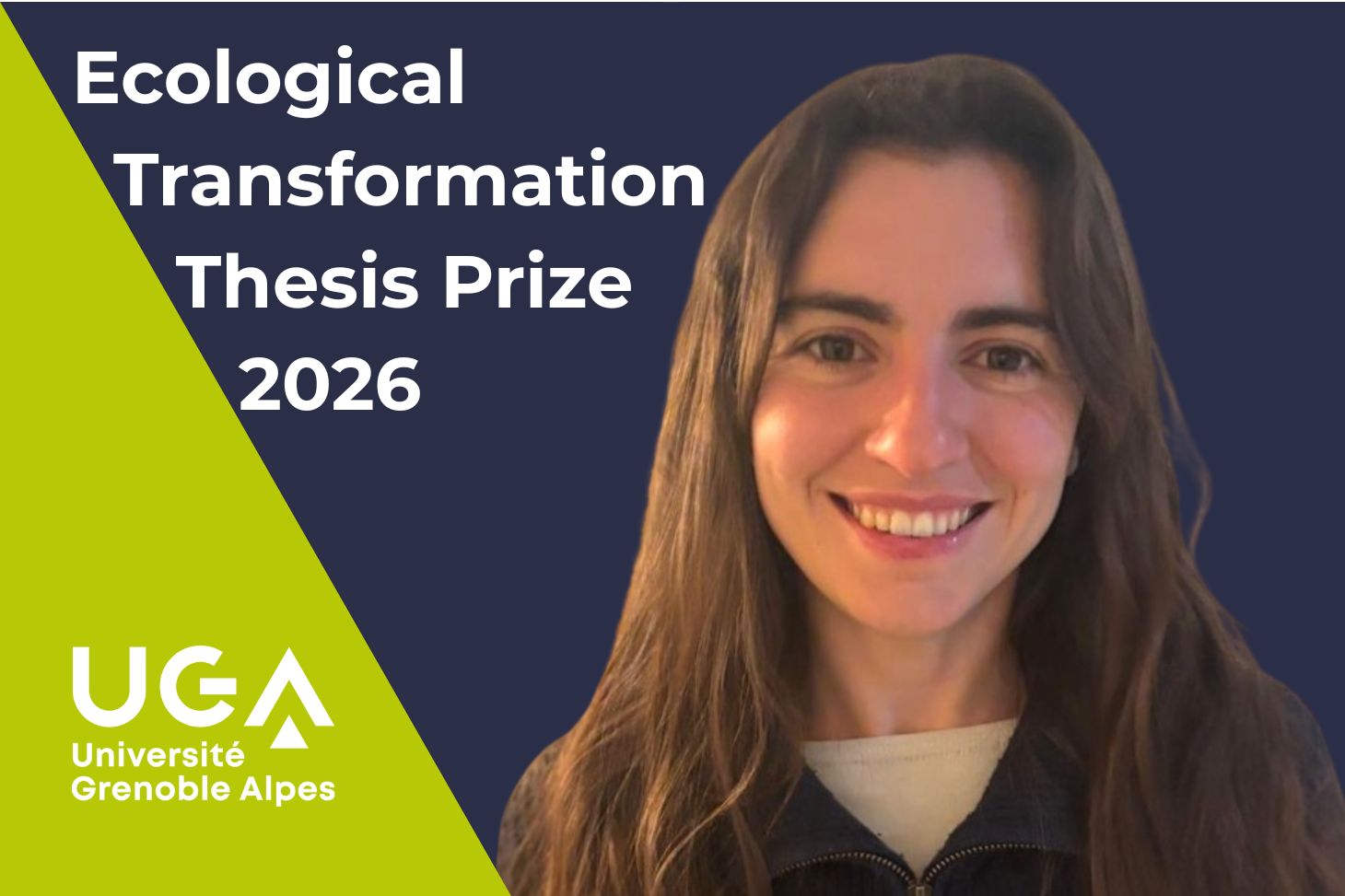
Anne Baranger received the 2026 Ecological Transformation Thesis Prize for his research work among PhDs graduating in 2025.
Her Thesis Title: Characterising the vulnerability of forests to climate change through demographic and physiological analyses
A Forest Paradox at the Heart of Climate Stakes
In Europe, forest coverage has been expanding for fifty years, raising hopes for a natural boost in the fight against global warming through carbon storage. However, this "green lung" is showing unprecedented signs of fragility: rising temperatures and the multiplication of droughts and fires are undermining tree survival and altering the composition of woodlands. Anne’s thesis is at the very core of ecological transformation by seeking to understand the deep mechanisms of this vulnerability to better protect these vital ecosystems.
Identifying the Root Causes of Forest Fragility
To help managers adapt forests to tomorrow's climate, it is no longer enough to simply observe the disappearance of a species; we must understand why it is disappearing. Anne’s work proposes an innovative "mechanistic" approach that analyzes vulnerability through three complementary lenses:
Physiological Resistance: The study of frost and drought tolerance identifies the critical thresholds beyond which a tree can no longer survive.
Renewal Capacity: The analysis of fecundity (seed production) reveals that certain populations in cold zones struggle to reproduce, limiting their ability to migrate or adapt quickly.
Community Resilience: The study of competition between species makes it possible to predict how a forest might recover after a storm or a fire.
Impact on Ecological Transformation
The major contribution of Anne’s thesis to ecological transformation lies in its ability to turn complex scientific data into actionable levers for sustainable land management:
Securing Carbon Sinks: By clarifying vulnerability factors, her thesis helps ensure that European forests continue to act as climate regulators and CO2 storage units.
Operational Decision Support: The results provide concrete evidence for choosing the species best suited to future climates, thereby avoiding costly environmental planting failures.
Preserving Biodiversity: By understanding how competition and climate reshape distribution areas, this research anticipates the risks of biological diversity loss at a continental scale.
A Bridge Between Science and Fieldwork
The ecological impact of Anne’s work is reinforced by close collaboration with field actors, such as the ONF and the CNPF. By integrating concrete biological processes into planning tools, her thesis moves forest management from a reactive stance to a strategy of anticipation. It is this ability to link ecological theory to forestry practice that constitutes an essential driver for the resilience of our landscapes in the face of 21st-century climate challenges.
Anne took up the challenge of explaining her thesis in three minutes at the 2023 edition of the ‘Ma Thèse en 180 secondes’ competition.
Doctoral School: ED CSV – Chemistry and Life Sciences Research laboratory: Laboratoire écosystèmes et sociétés en montagne (LESSEM, INRAE/UGA) Thesis supervision: Georges Kunstler et Thomas Cordonnier
Share the linkCopyCopiedClose the modal windowShare the URL of this pageI recommend:Consultable at this address:La page sera alors accessible depuis votre menu "Mes favoris".Stop videoPlay videoMutePlay audioChat: A question? Chatbot Robo FabricaMatomo traffic statisticsX (formerly Twitter)

 Learning by Research