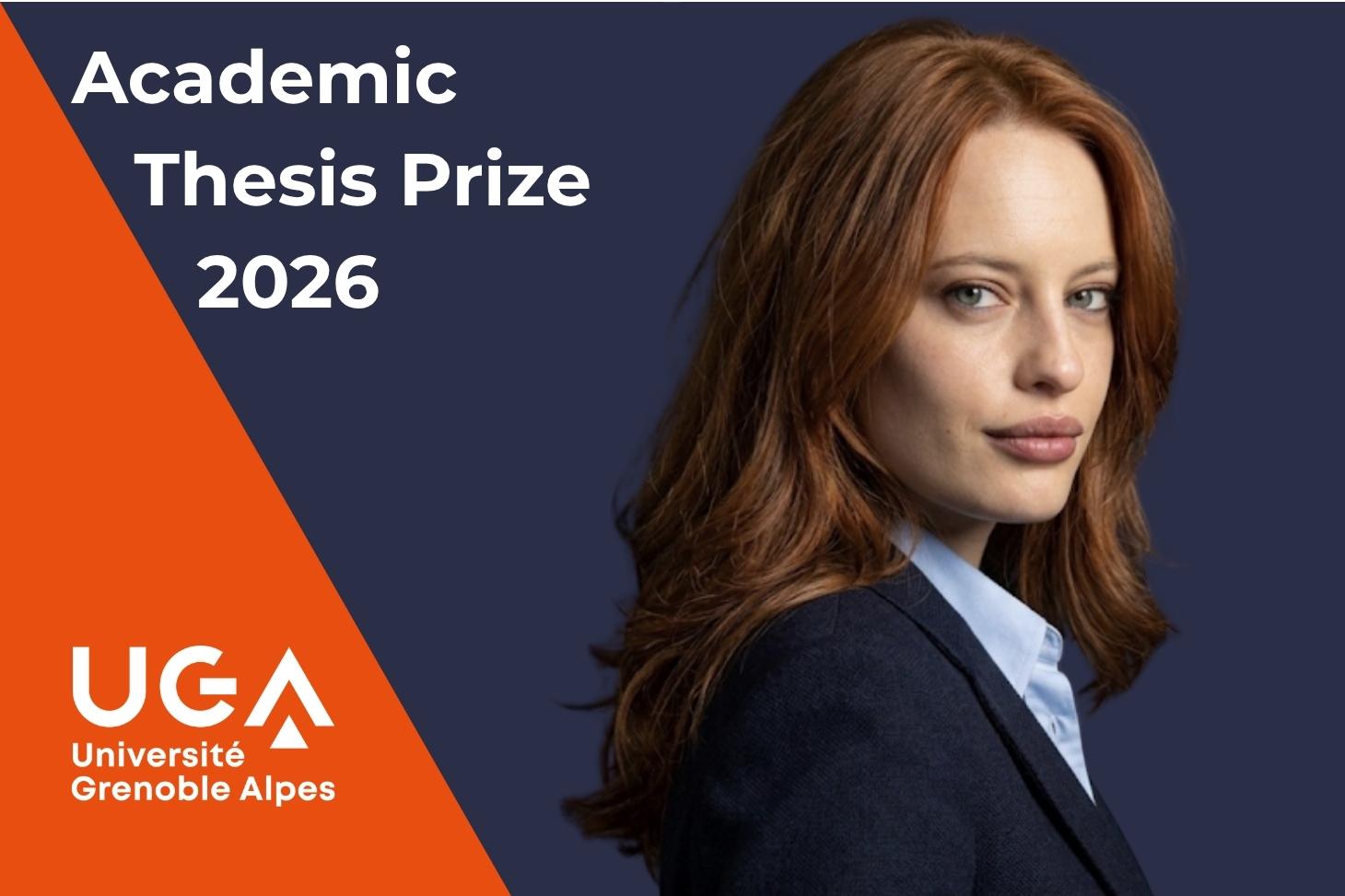
Julie Hamonic received the 2026 Academic Thesis Prize for his research work among PhDs graduating in 2025.
Her Thesis Title: Judicial evidentiary reasoning
Theoretical Issues and Objectives
The assessment of evidence constitutes the ultimate and decisive phase of the judicial process, marking the transition from the investigation to the proclamation of a legal truth or the recognition of doubt. Despite its crucial importance for understanding the act of judging, this stage remains characterized by a certain doctrinal opacity in France. The thesis proposes to unveil these mechanisms by offering a structured theoretical framework for evidentiary reasoning, analyzing how the judge handles the diversity of modes of proof and the complex intellectual operations that result from them.
Analysis of Reasoning: Inferences and Implicit Logics
The first part of Julie’s work is dedicated to deconstructing the cognitive processes at play during the evaluation of evidence. The study revisits theories of reasoning through the lenses of inference and probability, while contrasting them with fundamental legal concepts such as the "object of proof" and the "inner conviction" (intime conviction). By revealing the implicit logical structures that guide decision-making, Julie's thesis demonstrates that judicial assessment is not a matter of mere intuition, but rather a structured and deliberate intellectual operation.
The Oversight of Reasoning by the Court of Cassation
The second part explores the tension between the trial judge's freedom and the oversight of the Court of Cassation. If the principle of the "sovereign assessment of the trial judges" (souveraine appréciation des juges du fond) seems to prevail, the analysis shows a more nuanced reality:
Rationality vs. Freedom: The Court of Cassation establishes a dividing line between the factual freedom granted to magistrates and an imposed constraint of rationality.
Emergence of a Doctrine: A true doctrine of assessment is emerging, aimed at ensuring that evidentiary reasoning is free from arbitrariness and rests on logical and coherent motivation.
Conclusion and Legal Perspectives
Ultimately, the thesis establishes that the freedom of the judicial judge in establishing proof is never absolute. It is contained and oriented by requirements of legitimacy and rationality. The office of the judge, particularly that of the Court of Cassation, consists less in saying what is "true" in absolute terms than in guaranteeing that, within the framework of the trial, doubt has been reasonably overcome. This work thus offers a major contribution to legal theory and to the training of judicial actors in methods of reasoning.
Julie took up the challenge of explaining her thesis in just three minutes during the 2024 edition of the “Ma thèse en 180 secondes” competition.
Key words: reasoning, proof, evidence
École doctorale : ED SJ – Law Research laboratory: Centre de recherches juridiques de Grenoble (CRJ - UGA) Thesis supervision: Étienne Vergès
Share the linkCopyCopiedClose the modal windowShare the URL of this pageI recommend:Consultable at this address:La page sera alors accessible depuis votre menu "Mes favoris".Stop videoPlay videoMutePlay audioChat: A question? Chatbot Robo FabricaMatomo traffic statisticsX (formerly Twitter)

 Learning by Research