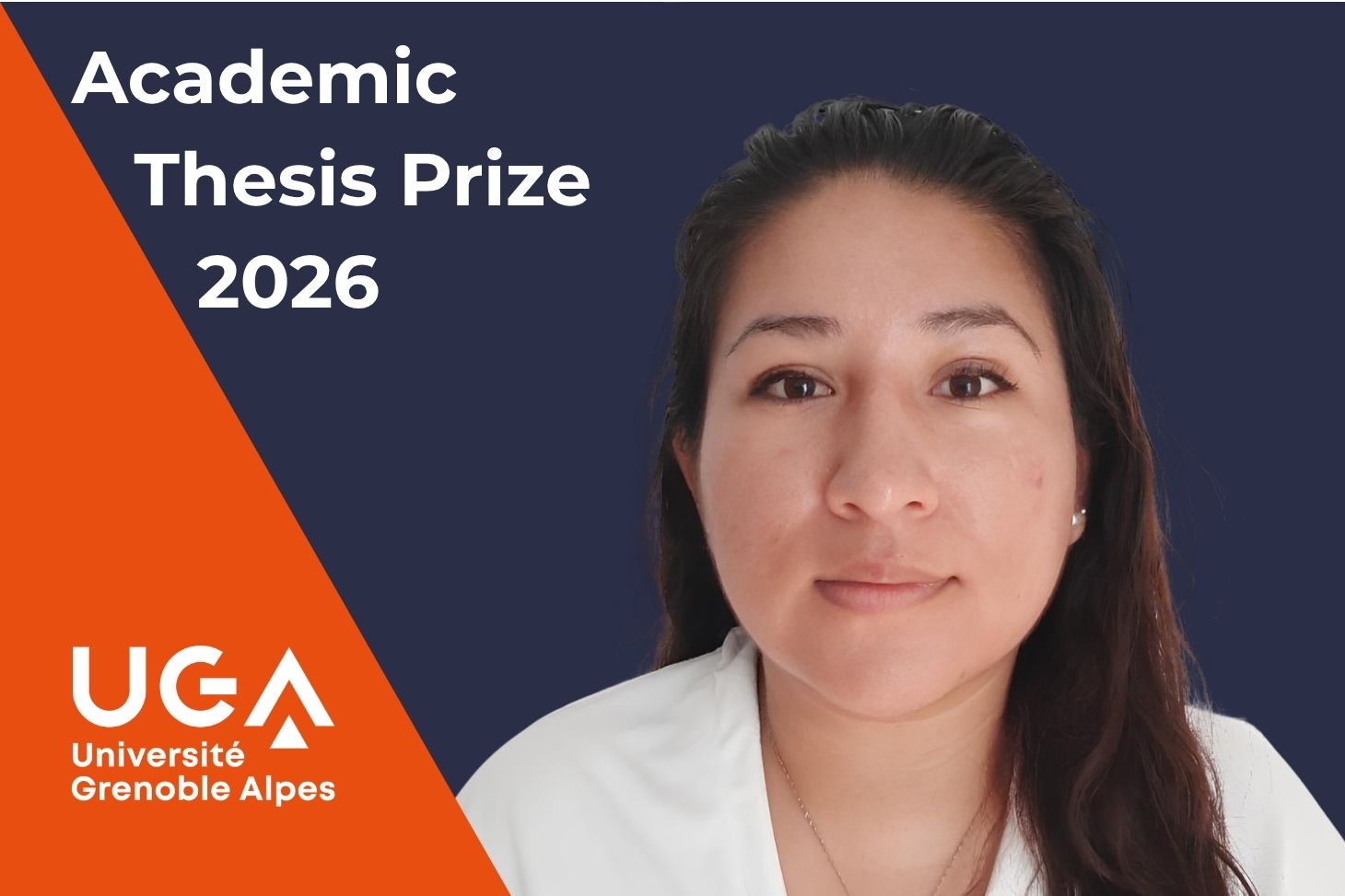
Nazareth Milagros Carigga Gutierrez received the 2026 Academic Thesis Prize for his research work among PhDs graduating in 2025.
Her Thesis Title: Light-and X-ray-responsive nanoliposomes to improve chemotherapy efficacies for pancreatic cancer
Scientific Context and Therapeutic Hurdles
Pancreatic ductal adenocarcinoma (PDAC) presents one of the bleakest prognoses in oncology, with a five-year survival rate of less than 10%. This therapeutic impasse is primarily due to two factors: the extensive stromal barrier (dense desmoplastic tissue) that restricts the diffusion of chemotherapeutic agents, and intracellular resistance mechanisms, such as lysosomal sequestration and degradation of active principles.
Technological Approach: Light and X-Ray Sensitive Liposomes
The objective of Nazareth’s thesis research was to develop nanometric vectors capable of transporting and releasing cytotoxic agents in a controlled manner. The strategy relies on the use of functionalized liposomes, activatable by external stimuli to bypass successive biological barriers.
Photochemical Internalization (PCI) and Oxaliplatin Bioavailability
The initial research phase focused on overcoming endolysosomal resistance through photochemical internalization. To achieve this, liposomes incorporating a benzoporphyrin-derived photosensitizer (BPD) were developed to potentiate the effects of oxaliplatin. The mechanism involves laser irradiation, which triggers the BPD to generate reactive oxygen species (ROS), leading to the disruption of lysosomal membranes and the subsequent cytosolic release of the drug. Results from both 3D microtumor models and in vivo trials demonstrate enhanced intracellular distribution and a significant reduction in tumor mass.
Radiocatalysis and Stromal Barrier Penetration
The second axis explored the use of X-rays to induce a radiocatalytic effect capable of disrupting the dense tumor environment.
AuDDT Liposomes: Integrating gold nanoclusters (Z=79) into the lipid bilayer amplifies X-ray absorption and secondary electron production, promoting local ROS generation through radiolysis.
Molybdenum-Iodine (Mo-I) Clusters: An alternative approach using bi-stimulable (light/X-ray) metallic clusters confirmed dose-dependent cytotoxicity correlated with cluster concentration and radiation dose.
Conclusion and Clinical Perspectives
Nazareth’s work establishes a solid proof of concept for an integrated therapeutic approach. By combining light-induced release for intracellular efficacy and radiocatalysis for stromal permeabilization, these nanovectors offer a promising pathway to optimize current chemotherapy protocols (such as FOLFIRINOX) while minimizing systemic toxicity.
In October 2025, Nazareth was already a recipient of the 2025 L’Oréal-UNESCO For Women in Science Young Talents France Award, presented by the L’Oréal Foundation in partnership with the Academy of Sciences and the French National Commission for UNESCO. Among the 34 doctoral and post-doctoral researchers honored, she distinguished herself in the category "Developing therapies for the future".
Key words: nanoliposomes, radiotherapy, photodynamic therapy, cancer stroma
Doctoral School: ED CSV – Chemistry and Life Sciences Research laboratory: Institute for Advanced Biosciences (IAB - CNRS/INserm/UGA) Thesis supervision: Amandine Hurbin and Mans Broekgaarden
Share the linkCopyCopiedClose the modal windowShare the URL of this pageI recommend:Consultable at this address:La page sera alors accessible depuis votre menu "Mes favoris".Stop videoPlay videoMutePlay audioChat: A question? Chatbot Robo FabricaMatomo traffic statisticsX (formerly Twitter)
 Learning by Research